Comparing Different Types of Isolated DC DC Converters for Your Next Project
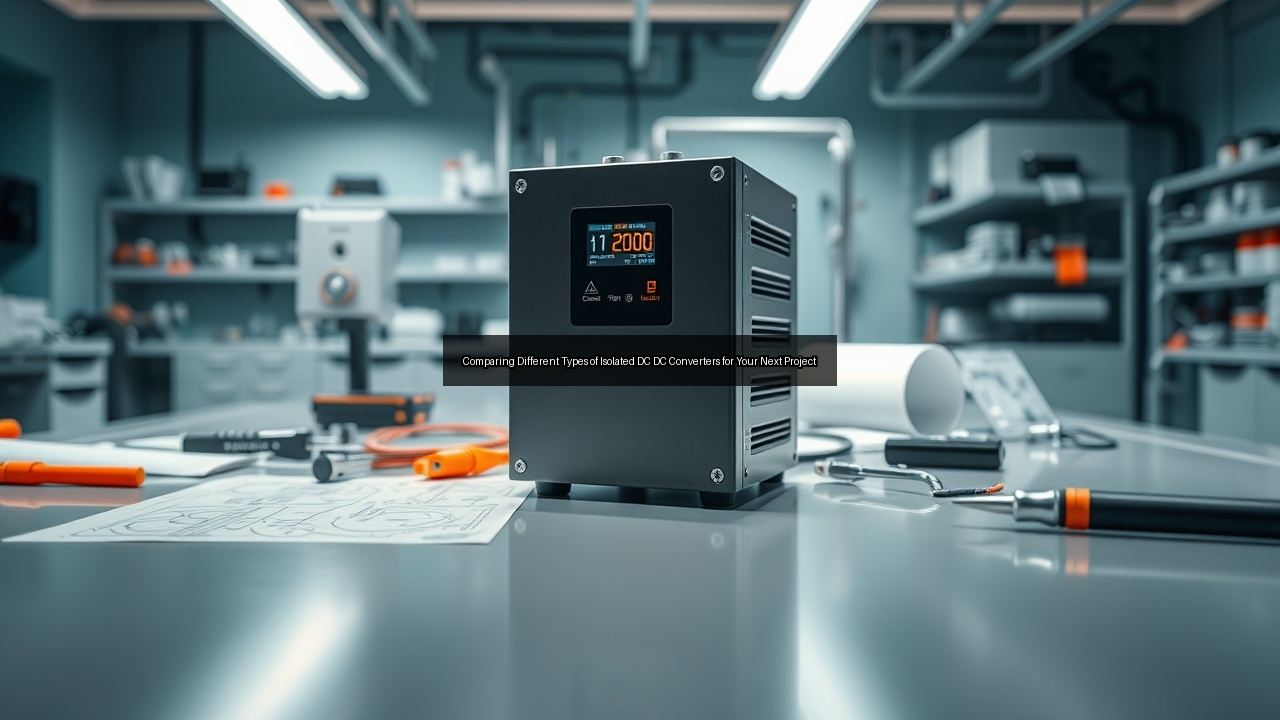
Understanding Isolated DC-DC Converters
What is an Isolated DC-DC Converter?
An isolated DC-DC converter serves as a crucial component in electronic systems, providing electrical isolation between its input and output. By using magnetic coupling, these converters ensure that the input voltage does not directly connect to the output, enhancing safety and performance. Isolated DC-DC converters are essential in applications requiring high voltage power supplies, where isolation protects sensitive components from high voltage spikes. They also play a pivotal role in telecommunication systems, automotive applications, and renewable energy systems, where reliable power management dc to dc converter is critical. Their ability to maintain performance across varying loads makes them a preferred choice for engineers designing complex electronic circuits.
How Isolated DC-DC Converters Work
Isolated DC-DC converters operate through a process of energy transfer via magnetic fields. Typically, these devices utilize transformers to achieve voltage conversion while maintaining electrical isolation. When an input voltage is applied to the primary winding of the transformer, it generates a magnetic field that induces a corresponding voltage in the secondary winding. This principle allows these converters to step up (boost) or step down (buck) voltage levels efficiently. Additionally, advanced control techniques enhance the performance of isolated DC-DC converters, enabling precise voltage regulation and improved efficiency. The design of these converters may involve various topologies, including flyback converters and push-pull configurations, each with its specific advantages and suited applications.
Key Benefits of Using Isolated DC-DC Converters
Isolated DC-DC converters offer several advantages that make them indispensable in modern electronic designs. Firstly, they provide protection against voltage spikes, ensuring that sensitive components remain safe from potential damage. This feature is particularly important in high voltage power supplies and in applications where safety standards are paramount. Secondly, these converters enhance system performance by reducing electromagnetic interference (EMI), which can disrupt the functionality of nearby electronic devices. Additionally, isolated DC-DC converters contribute to improved efficiency, often achieving higher power conversion rates compared to non-isolated designs. Lastly, their versatility allows them to be used in a wide range of applications, from industrial automation to consumer electronics, making them a go-to solution for engineers across various sectors.
Types of Isolated DC-DC Converters
Flyback Converters: Advantages and Applications
Flyback converters represent one of the most popular types of isolated DC-DC converters, particularly valued for their simplicity and effectiveness. These converters utilize a transformer that operates in both the forward and reverse directions, allowing them to efficiently step up or step down voltage levels. One of the primary advantages of flyback converters is their ability to handle wide input voltage ranges while providing stable output. This makes them ideal for applications in power supplies for televisions, LED drivers, and battery chargers. Their compact design also allows for integration into smaller devices without compromising performance. Furthermore, flyback converters can be easily adapted to varying load conditions, making them a flexible choice for engineers looking to optimize their designs.
Boost Converters vs. Buck Regulators
Boost converters and buck regulators serve distinct roles within the realm of isolated DC-DC converters, each tailored for specific voltage conversion needs. Boost converters increase the input voltage to a higher output voltage, making them essential for applications requiring voltage elevation, such as in battery-powered devices. Conversely, buck regulators lower the input voltage to produce a reduced output voltage, which is crucial for powering lower-voltage components from a higher voltage source. Both types of converters utilize magnetic components and switching techniques to achieve their intended voltage transformations. Engineers often decide between these options based on the voltage requirements of their applications, efficiency considerations, and the overall complexity of the circuit design. Understanding these differences is vital for selecting the right converter for any project.
Comparative Analysis of Topologies
A comparative analysis of various topologies in isolated DC-DC converters reveals distinct characteristics that impact performance and application suitability. Common topologies include flyback, forward, half-bridge, and full-bridge converters. Flyback converters excel in low-power applications due to their simple design and cost-effectiveness. Forward converters, on the other hand, deliver higher efficiency at moderate power levels, making them suitable for industrial applications. Half-bridge and full-bridge converters are ideal for higher power levels, offering superior control over output voltage and current. Each topology has its advantages and disadvantages; hence, engineers must carefully consider factors like power requirements, efficiency, and thermal management when selecting the appropriate configuration for their isolated DC-DC converter design.
Selecting the Right Isolated DC-DC Converter for Your Project
Factors to Consider: Voltage, Power, and Efficiency
Choosing the right isolated DC-DC converter involves evaluating several critical factors, including voltage requirements, power levels, and overall efficiency. Engineers must first define the input and output voltage specifications to ensure compatibility with existing systems. Next, the power rating becomes essential, as it determines the converter's capacity to handle specific loads. Efficiency plays a significant role, as higher efficiency translates to less energy wastage and reduced heat generation, which is vital for maintaining system reliability. In high-performance applications, selecting a converter with a high efficiency rating can enhance the overall system performance. Conducting thorough calculations and simulations helps engineers make informed decisions, ensuring that the chosen converter meets both current and future project demands.
Common Applications in High Voltage Power Supplies
Isolated DC-DC converters find extensive use in high voltage power supplies across various industries. In telecommunications, they power equipment such as base stations and signal processors, where reliability is non-negotiable. In the automotive sector, they manage power distribution in electric vehicles, ensuring efficient operation of critical systems. Additionally, renewable energy systems, like solar power inverters, utilize isolated DC-DC converters to optimize energy transfer from solar panels to the grid or battery systems. The ability to maintain voltage regulation and isolation under fluctuating loads makes these converters integral to the efficient functioning of high voltage applications. Engineers designing these systems must prioritize selecting converters that meet stringent performance and safety standards.
Challenges and Solutions for Engineers in the Americas
Engineers in the Americas face unique challenges when working with isolated DC-DC converters, including stringent regulatory standards and varying regional requirements. Understanding these regulations is crucial for compliance and market readiness. Additionally, engineers often encounter difficulties related to thermal management and efficiency optimization in high power applications. Solutions such as selecting the appropriate thermal management strategies, including heat sinks and active cooling systems, can mitigate these challenges. Furthermore, utilizing advanced simulation tools can assist in predicting converter performance, enabling engineers to fine-tune designs before prototyping. Collaboration with component manufacturers to ensure access to high-quality parts can also significantly enhance the reliability and efficiency of isolated DC-DC converters in challenging environments.
Future Trends in Isolated DC-DC Converters
Innovations in DC-DC Switching Technologies
The landscape of isolated DC-DC converters continues to evolve, driven by innovations in DC-DC switching technologies. Emerging techniques such as resonant switching and digital control are paving the way for converters that offer higher efficiency and improved performance. Resonant converters reduce switching losses, allowing for higher frequency operation, which can significantly minimize component size. On the other hand, digital control systems enable precise regulation and adaptability to varying load conditions, enhancing overall system performance. These advancements cater to the growing demand for compact, efficient power solutions in consumer electronics and industrial applications. Engineers must stay informed about these developments to leverage new technologies effectively in their designs.
The Role of Isolated Converters in Power Inverters
Isolated DC-DC converters play a pivotal role in the functionality of power inverters, serving as the backbone for energy management in renewable energy systems. They facilitate the conversion of DC power from sources such as solar panels into AC power suitable for grid integration. The isolation provided by these converters ensures that any potential faults do not affect the input side, enhancing safety and reliability. As the demand for renewable energy solutions increases, the integration of high-performance isolated converters will become even more critical. Engineers developing power inverters must focus on optimizing these converters to achieve maximum efficiency and performance, contributing to dc isolation the overall success of renewable energy systems.
Emerging Standards and Regulations
As technology progresses, emerging standards and regulations increasingly shape the design and implementation of isolated DC-DC converters. Regulatory bodies are continuously updating guidelines to ensure safety, efficiency, and compatibility in electrical systems. These standards address issues such as electromagnetic interference (EMI), thermal performance, and component reliability. For engineers, staying abreast of these changes is essential for compliance and successful project execution. Adapting designs to meet evolving regulations can also provide a competitive edge in the marketplace. Emphasizing compliance from the outset not only streamlines the design process but also fosters trust among end-users, ensuring that isolated DC-DC converters meet the high expectations of modern applications.
See Also
- How to Choose the Right Isolated DC DC Converter for Your Design Needs
- Isolated DC DC Converters in Medical Devices Ensuring Safety and Performance
- Maximizing Performance with Advanced Isolated DC DC Converter Designs
- How to Optimize Your Circuit Design with Isolated DC DC Converters
- The Science Behind Isolated DC DC Converters and Their Applications